When to order: the date that matters more than the stock level.
Most shortages are not caused by ordering too little. They are caused by ordering too late. The question to ask of every item is not “how much is on the shelf?” but “what is the last day I can order and still be in time?”
Stock on the shelf is the wrong number
A shelf with plenty of stock can be in trouble, and an empty shelf can be fine. What counts is the whole position: what is on hand, plus what is already on order and will arrive in time, minus the demand that is already promised to customers or production orders.
Planning on the shelf alone leads to the two classic errors: ordering again for something already on its way, and feeling safe about stock that is already promised to someone else.
Lead time is the clock
The moment you place an order, a clock starts: the lead time until it arrives and can be used. Everything that happens in that window has to come from the stock you already have or have already ordered. A part with a three-month lead time means deciding today about demand three months away.
The lead time that matters is the real one, not the one in the master data. Suppliers that deliver later than planned quietly shorten your safety margin on every order.
Safety stock is the buffer for what you cannot know
Forecasts are never exact, and suppliers are not always on time. Safety stock is the buffer that absorbs both. It should be larger where demand is hard to predict, where suppliers are unreliable and where a shortage hurts most, and smaller where demand is steady.
A buffer set by feel years ago and never revisited is either too large, tying up cash, or too small, causing shortages. It should follow how wrong the forecast really turned out to be.
From reorder point to order-by date
The reorder point is the stock position at which a new order should go out: enough to cover the demand during the lead time, plus the buffer. It answers “at what level?”.
The order-by date answers the more useful question: “by when?”. Look ahead at the position week by week, find the day stock would run out, and count back the lead time. That is the last day an order can be placed and still arrive in time. Before that day you can plan calmly. After it, a new order cannot prevent the shortage any more.
What moves the date
The order-by date is not fixed. It moves earlier when demand rises, when a customer order or work order comes in, when a supplier pushes a delivery back or when a quality block takes stock out of use. It moves later when demand drops or an open order is pulled in.
Late orders deserve a special look: an order long past its due date may already be delivered or cancelled while it is still open in the ERP. Left alone, it makes the date earlier than it really is.
When the date has passed
Once the order-by date is behind you, ordering again is too late. The options are with orders that already exist: expedite one, or pull one in to an earlier date. If none can come early enough, the shortage is coming and it is time to warn the people who depend on the item.
That is why the date belongs on the screen next to every item, with how many days are left. A list of items sorted by that date is a planner’s to-do list.
How plnnd shows it
plnnd calculates the stockout date and the order-by date for every material at every location, from your own stock, open orders, demand and supplier lead times, and it flags suppliers that deliver later than planned. The item’s state follows from the dates, and the reason is spelled out in plain words with the numbers behind it.
When the date has passed, Actions suggests what to do with the orders that already exist: expedite, or pull in, with the date that would keep stock above the buffer.
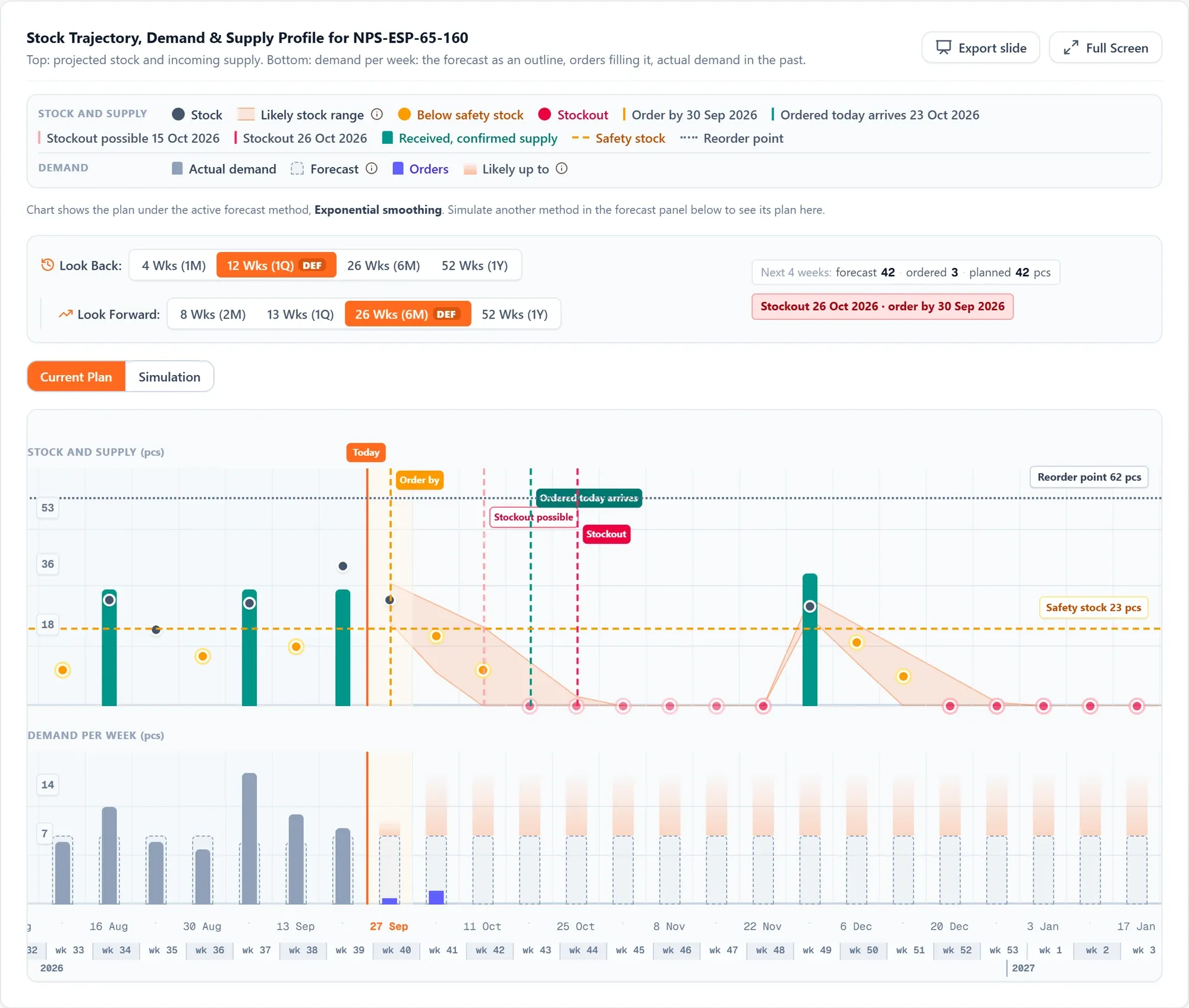
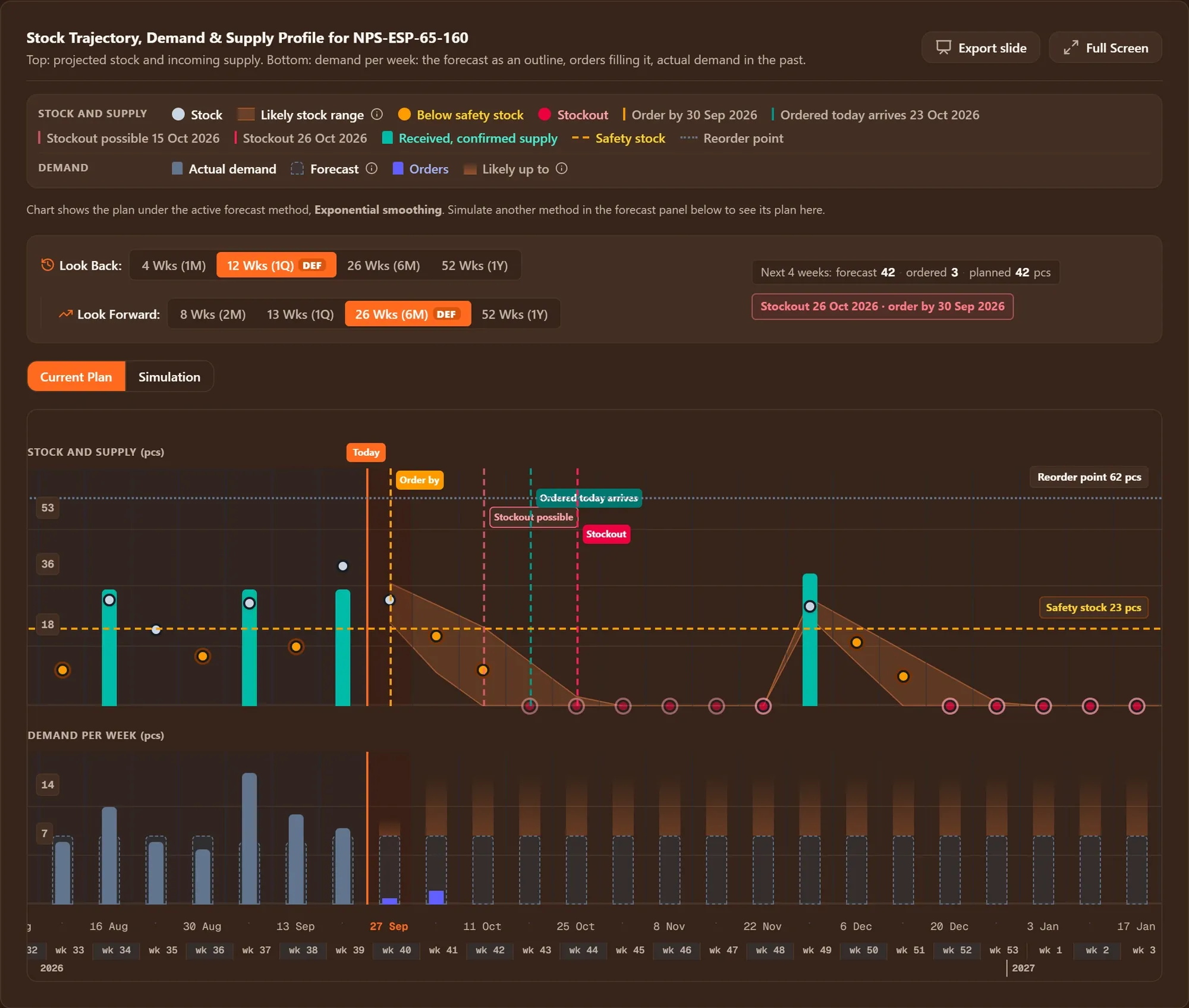
The End-suction Pump ESP 65-160 of the Norvik Pump Systems sample: order by 30 September, stockout on 26 October, and the open order arrives too late. plnnd suggests pulling it in to 9 October.